
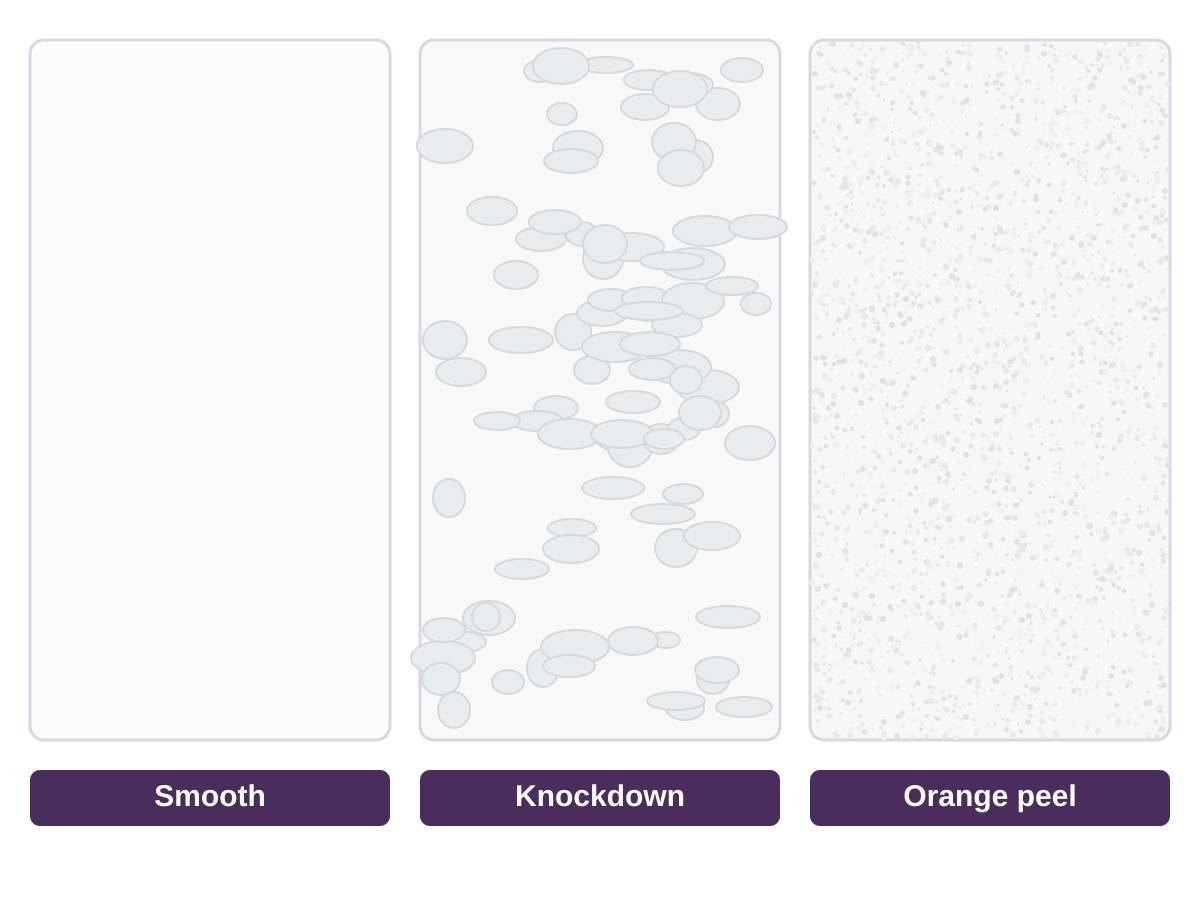
The textures people choose
Knockdown
Compound is sprayed on in drops, left to set for a moment, then flattened with a wide knife. The result is a low, mottled pattern that hides seams and small flaws well. It's the most common replacement for popcorn.
Orange peel
A fine spray that dries to a subtle dimpled surface, like the skin of an orange. It's close to smooth from a distance, a bit more forgiving up close, and easy to keep consistent across a large ceiling.
Skip trowel
Compound is applied by hand in irregular swipes for a handmade, plaster-like look. It suits some craftsman and rustic interiors but is less common on ceilings.
Texture or smooth?
| Finish | Hides flaws | Finishing labor | Look |
|---|---|---|---|
| Smooth | Least | Most | Clean, current |
| Orange peel | Some | Moderate | Nearly smooth |
| Knockdown | Most | Less | Soft, textured |
If you want the flattest possible ceiling, see smooth ceiling finish.
How retexturing is done
- Remove the popcorn with the room sealed off.
- Repair the drywall: seams, fasteners and gouges. See ceiling repair.
- Prime so the texture absorbs evenly.
- Apply the texture and let it cure.
- Paint: see ceiling painting.
Matching an existing texture
Maybe a previous owner already redid the kitchen with knockdown and you want the bedrooms to match. Show the pro the existing ceiling at the estimate. They can usually adjust the mix, spray pressure and timing to get close. Painted-over textures are the hardest to match exactly.
What affects the price
- Square footage and ceiling height
- Drywall repairs needed after removal
- Texture type and whether it must match another room
- Whether primer and paint are included
Call (678) 716‑1062 for a free estimate from a local pro, or see the cost guide.