
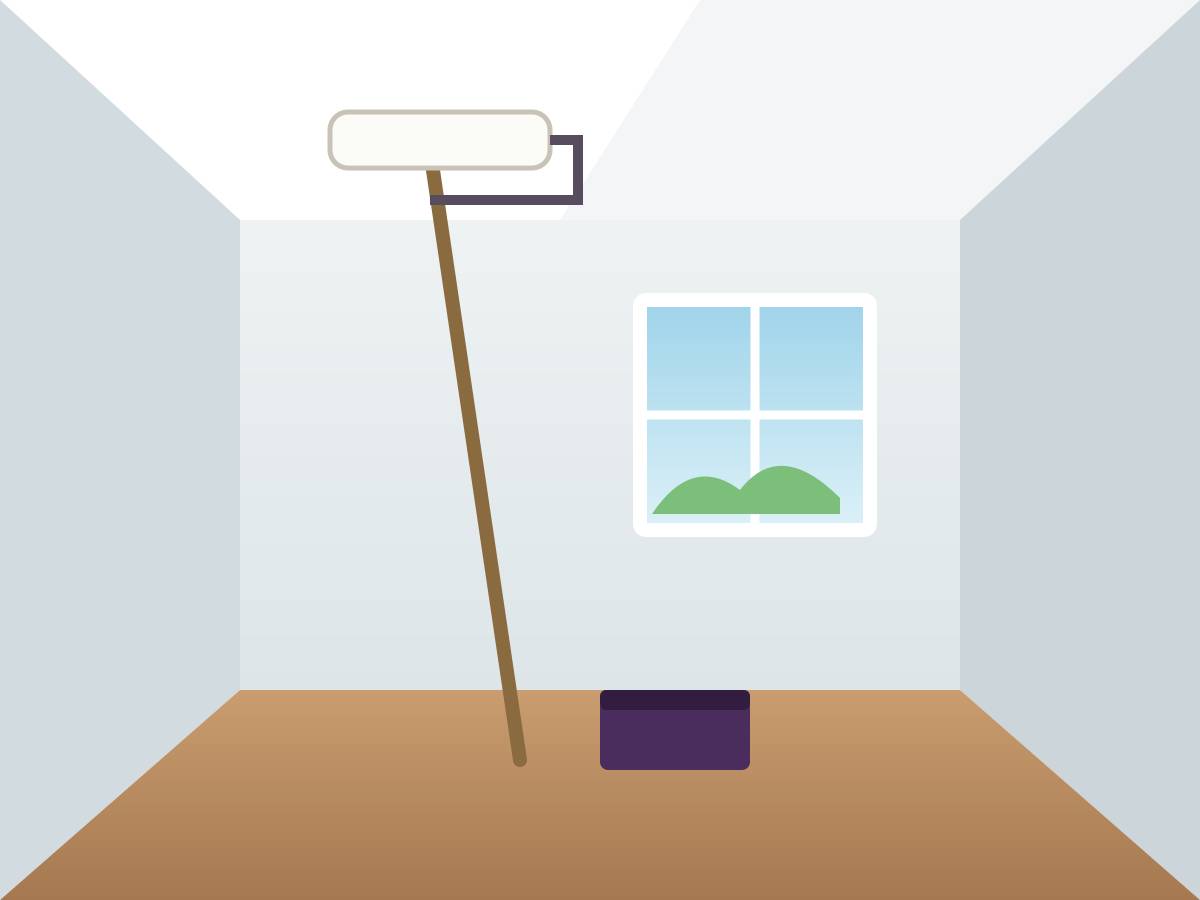
Why fresh drywall work needs primer
After removal and skim coating, the ceiling is a mix of new compound, older drywall paper and repaired patches. Each soaks up paint differently. Without primer, patches show through as dull or shiny spots once the light hits them. A good drywall primer seals everything to one even surface.
Water stains are the exception that needs special treatment: they need a stain-blocking primer, or the brown ring can bleed back through new paint.
Choosing sheen and color
- Flat is standard on ceilings. It hides small imperfections and doesn't bounce glare.
- Matte or moisture-resistant products are sometimes used in kitchens and bathrooms.
- White makes rooms feel brighter and taller, which helps in ranch houses with standard 8-foot ceilings.
- A light tint of the wall color can soften a room; test a patch first.
How ceiling painting is done
- Protect the room: floors, walls and furniture covered.
- Check the surface with a work light for any last ridges or dents.
- Prime with a drywall primer, plus stain blocker where needed.
- Cut in along the walls with a brush.
- Roll the finish coats, keeping a wet edge to avoid lap marks.
- Touch up and clean up.
Painting as part of the whole project
Having the same pro remove the popcorn, finish the drywall and paint means one crew owns the result. If something looks off under the paint, there's no argument about whose job it was. See smooth ceiling finish and retexturing for the step before paint.
What affects the price
- Square footage and ceiling height
- Whether stain-blocking primer is needed
- Number of finish coats
- Whether walls are being painted at the same time
Call (678) 716‑1062 for a free estimate from a local pro, or see the cost guide.